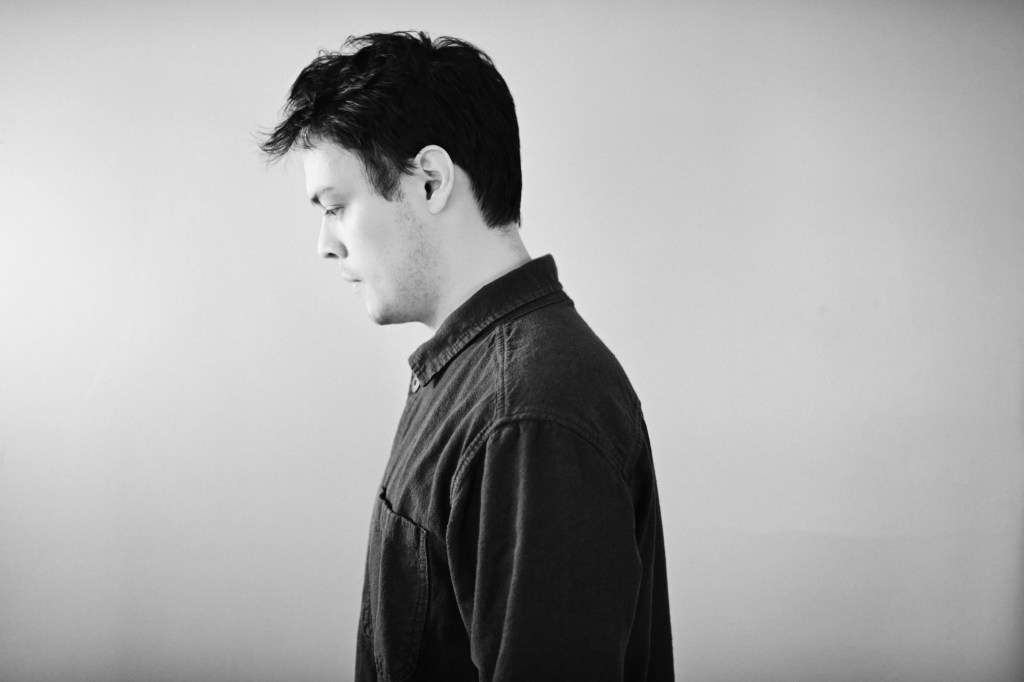
Luis Miguel Delgado Grande (b. 1990, Bucaramanga) is a composer, violinist, and artistic researcher based in Pittsburgh, whose music treats listening as a space for memory, encounter, and shared time. His output spans acoustic chamber music, electroacoustic composition, and instrument design, moving between the Colombian, European, and U.S. contemporary music scenes, from concert halls and festivals to public spaces and interdisciplinary installations.
His music has been performed by leading ensembles including the JACK Quartet, the International Contemporary Ensemble, Talea Ensemble, ~Nois, Quatuor Diotima, Cepromusic, Barcelona Modern Ensemble, the Moscow Contemporary Music Ensemble, MANA Quartet, and Quartetto Maurice, and by soloists such as Lorelei Dowling, Chirchan Larson, Robin Meiksins, and Michael Hernandez. His works have been presented at venues and festivals including the Palacio de Bellas Artes in Mexico City, Roulette in Brooklyn, the Andy Warhol Museum, Bled Contemporary Music Week (Slovenia), the Ticino Musica Festival (Switzerland), Festival Mixtur (Spain), the 27th International Review of Composers (Belgrade), and the Thailand New Music and Art Symposium.
His honors include the Premio Jóvenes Compositores from the Banco de la República de Colombia, the Humanities Center Research Grant and the Humanities Engage Fellowship at the University of Pittsburgh, a residency at the Virginia Center for the Creative Arts, and first prize in the Becas Bicentenario (Government of Santander). He has held artist residencies with Cepromusic and the Ministry of Culture of Colombia (Mexico City), the National Centre for Contemporary Arts (Russian Federation), and Copiuensemble through Germina.Cciones / Ibermúsicas (Chile), as well as in the Department of Physics and Astronomy at the University of Pittsburgh. His recent commissions include works for the Banco de la República de Colombia, .abeceda New Music Ensemble, ~Nois, and Barcelona Modern Ensemble.
Alongside composing, Delgado Grande is an artistic researcher whose work centers on contemporary musical expression in Latin America and on transnational movements in art. His current research engages the music of Rodolfo Acosta and questions of memory, aurality, and state violence in Colombia. He also develops Protoplasma, a custom sensor instrument built in Max/MSP and Arduino that explores physical computing as a compositional practice.
Delgado Grande studied composition with Blas Emilio Atehortúa at the Universidad Industrial de Santander, and later at the Centro Superior Katarina Gurska, attached to the Royal Conservatory of Music of Madrid, with Alberto Posadas, Aureliano Cattaneo, and José Luis Torá. He has worked in masterclasses with Beat Furrer, Franck Bedrossian, Pierluigi Billone, Raphaël Cendo, Francesca Verunelli, and Oscar Bianchi, among others. He is currently a Ph.D. candidate in Composition and Music Theory at the University of Pittsburgh, where he holds a Mellon Predoctoral Fellowship and serves as a Teaching Fellow and Assistant Conductor of the University of Pittsburgh Symphony Orchestra. His scores are published by Babel Scores (Paris), and he is a member of ASCAP.
“I was immediately struck by the way he heard the saxophone, and I knew a work for soprano saxophone by Luis Miguel would be quite special.” — Michael Hernandez, on commissioning Cesonia y el espejo
selected press
INBAL Prensa — “Un viaje por la memoria en el Tercer Concierto del Ensamble Cepromusic” (2026)
“El concierto comienza con Siete Mil Años en Amarillo, de Luis Miguel Delgado Grande, obra en la que reflexiona sobre el intento de escuchar el eco de lo humano más allá del tiempo y del espacio. Para su composición, Delgado Grande se basa en el trabajo del artista cubano Fidel Yordan Castro y en la canción quechua Wedding Song, incluida en el Disco de Oro de la NASA (1977).”
NextPittsburgh — “12+ things to do in Pittsburgh this weekend, April 2–5” (2026)
“Take your ears to cutting-edge sonic terrains when Music on the Edge presents the culminating concert in its 2026 season. Fans of classical and contemporary music alike won’t want to miss this special Pittsburgh debut of the Nois Saxophone Quartet.”
“Así como el Kronos tiene dentro de su repertorio obras de los colombianos Mario Galeano y Alba Fernanda Triana, y el Latinoamericano a Blas Emilio Atehortúa y Diego Vega, SIGMA ha hecho de las obras colombianas parte de su repertorio desde su primer contacto… Este es el caso de la obra Estudio de la luz (2018) del joven bumangués Luis Miguel Delgado Grande (1990), estrenada en Bucaramanga.”
INBAL Prensa — “El Ensamble Cepromusic realizará gira internacional en Colombia” (2025)
“El Ensamble del CEPROMUSIC viajará a Bogotá, Colombia, como parte de la Temporada Nacional de Conciertos 2025, organizada por el Banco de la República… Las obras ganadoras de la convocatoria [Jóvenes Compositores Colombianos 2025] corresponden a los compositores Jhoan Sebastián Infante Murcia, Laura Pacheco Nieto, Juan Manuel Mejía Villanueva y Luis Miguel Delgado Grande.”
“¿Quién podría decir dónde radica la chispa, el impulso, la semilla que promueve la creación de una gran idea que logra transformarse en sonidos que, una vez interpretados, cautiven a quienes escuchan una melodía? Lógicamente, esta pregunta solo podría responderla alguien a quien esa chispa le ha llevado a estrenar próximamente tres de sus obras en festivales internacionales…”
El Espectador — El Magazín Cultural — “Ensamble Cepromusic, las dos caras de la moneda” (2018)
“Los sonidos transmiten ideas y sensaciones, como la obra Ãtman del colombiano Luis Miguel Delgado, que transportó mi imaginación a través de texturas tímbricas superpuestas en una secuencia de imágenes sonoras.”
SIGMA Project — “Gira 10º Aniversario SIGMA Project (2008–2018)” (2018)
“Tendremos nuevos proyectos de investigación, encargos y estrenos muy especiales en este año de aniversario, trabajando codo con codo junto a nuestros compositores Manuel Hidalgo, Alberto Bernal, Alberto Carretero, Andrés Valero Castell, así como con Liza Lim (Australia), Raphaël Cendo (Francia), Sergio Luque y José Luis Hurtado (México), Fabian Panisello (Argentina), Juan Pablo Carreño y Luis Miguel Delgado (Colombia).”
Vanguardia — “Espacios Revelados” (2018)
“Los artistas y colectivos que participaron en esta iniciativa fueron Rolf Abderhalden, Jehny Ariza, Jonathan Blanco, Freddy Barbosa, Luis Miguel Delgado, Luis Sotelo, Carolina Sanin, Frank Rodriguez, Karen Biswell, Matamaba y Bicho Arquitectura.”
research
My published research expositions are hosted at the Research Catalogue of the Society for Artistic Research.
An analysis of Rodolfo Acosta’s True Negatives (2009) as a counter-narrative exposing Colombia’s “false positives,” a euphemistic state-crafted fantasy that obscures the military’s murder of civilians presented as combat kills. The project examines how compositional decisions — controlled improvisation, quasi-melodic gestures — function as deliberate artistic strategies of counter-fantasy, and reflects on how this analysis enriches my own practice as a space for collective memory.
A theoretical exposition on In Vitro, my 2018 sound and camera-obscura installation at Plaza San Mateo, Bucaramanga, commissioned by Siemens Stiftung for Espacios Revelados. The text draws on Deleuze and Guattari’s rhizomatic thought and Nigel Thrift’s non-representational theory to articulate sound, image, and space as three distinct intertexts, and reflects on the term “public” as the primary nonrepresentational meaning in site-specific artistic practice.

